

 Request Salt System Service
Call: 303-912-0227
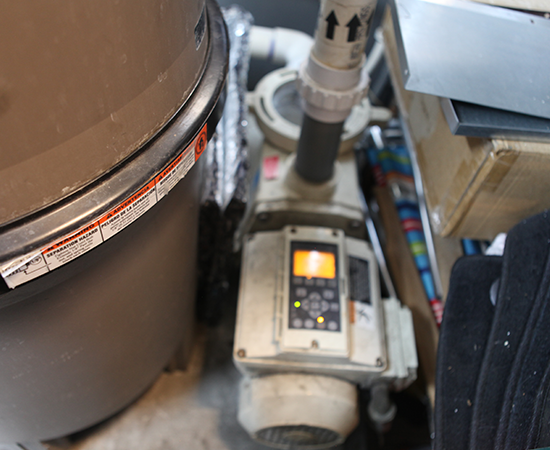
Is your saltwater pool struggling to maintain chlorine, showing warning lights, or needing frequent supplemental chlorine? Denver Pool Maintenance provides salt chlorine generator troubleshooting, cleaning, repair, and salt cell replacement throughout the Denver metro area.
We test the system before recommending new equipment. In many cases, we can replace the salt cell while keeping the existing transformer and power supply, provided they are working correctly and compatible with the replacement.
A low chlorine reading is a reason to investigate the whole system. The cell may be worn, but operating settings, water conditions, or another equipment problem can cause similar symptoms.
We use those findings to recommend cleaning, adjustments, component repair, or replacement.
A failed salt cell does not automatically require replacing the entire salt system. We check the existing power supply, including its transformer, and confirm compatibility before recommending which parts to replace.
When a cell is worn out, a compatible replacement may allow you to retain the existing power equipment. Some models also have serviceable sensors or control modules. We explain the repair options available for your equipment.
Calcium buildup can interfere with salt cell operation. We inspect the cell and use the manufacturer's cleaning procedure when deposits need removal. Acid washing may be appropriate when rinsing does not remove the scale.
On pools that develop scale, cleaning may be needed once or twice during the swimming season. We base acid cleaning on the cell's condition because unnecessary acid washing can damage its plates. Cleaning removes deposits; a cell that remains worn or faulty may still need replacement.
We troubleshoot Pentair IntelliChlor systems, including installations connected to IntelliCenter automation. Depending on the equipment configuration, the salt system may use a power supply inside the IntelliCenter enclosure or a separate external power center.
We identify your cell, power supply, and control setup before selecting replacement equipment. An external power supply can also be used with automation, so its location alone does not determine compatibility.
Denver Pool Maintenance serves pool owners in Denver, Cherry Hills Village, Greenwood Village, Centennial, Littleton, Highlands Ranch, and surrounding communities.
Call or text 303-912-0227 to request salt system service. Photos of the cell label, the outside of the power supply or control panel, and any displayed warnings can help us identify your equipment before the visit.
Persistent low chlorine, recurring cell warnings, or poor output after appropriate cleaning can be signs that a salt cell needs attention. We test the system and check operating conditions before recommending replacement, so a settings, flow, or power problem is not mistaken for a worn cell.
Correct salt is only one requirement. Insufficient run time, a low output setting, restricted flow, cold water, scale, or high chlorine demand can leave the pool short of chlorine. Water balance and stabilizer levels also matter. If the cell still produces too little chlorine after these conditions and the power supply are checked, replacement may be appropriate.
Yes, in many cases. We test the existing power supply, including its transformer, and confirm that it is compatible with the replacement cell. If it is working properly, it can often stay in place. A failed power supply or incompatible replacement may require additional parts.
Sometimes. If calcium scale is interfering with operation, cleaning may restore performance. We inspect and rinse the cell first, then use the manufacturer's acid-cleaning procedure when needed. Cleaning removes scale, but it cannot make a worn-out or electrically failed cell new again. We reassess operation after cleaning.
Cleaning frequency depends on scale buildup and the manufacturer's guidance. Some pools may need cell cleaning once or twice during the swimming season, while others need it less often. Regular inspection does not mean automatic acid washing: unnecessary acid cleaning can damage the cell plates.
It may be. IntelliCenter installations equipped for salt chlorination can contain the salt-system transformer and power components inside the automation enclosure. Other installations use an external power center. We identify the actual configuration and check both power and control communication when diagnosing the problem.
No. Many salt systems work with a separate external power supply and their own controls. A compatible automation system can add control options, but IntelliCenter is not required for every salt chlorine generator. We recommend equipment that works with your existing pool setup.
Have the water tested before adding more salt, especially if you have already added some. We compare an independent reading with the operating range for your specific model. A persistent warning with verified correct salinity needs further diagnosis. More salt will not correct a sensor or equipment fault.
Yes. Many salt chlorine generators reduce or stop production below their operating temperature limit. The cutoff depends on the model. A cold-water warning during Denver's cooler months does not by itself mean the cell has failed. We check the temperature and recommend an appropriate plan for maintaining chlorine.
Not necessarily. A low-flow warning can come from restricted circulation, a dirty filter or basket, an unsuitable pump setting, or a flow-sensing problem. We check circulation and the sensor before deciding which component needs service.
Service life varies by model, operating hours, water balance, scale buildup, and maintenance. A heavily used cell can wear differently from one serving a seasonal pool. We assess its condition and performance rather than recommending replacement solely because it has reached a particular age.
Possibly. A higher-capacity cell may help a system that struggles to meet the pool's chlorine demand, but it must be compatible with the power supply, controls, and plumbing. We consider pool volume, usage, and available run time before recommending a replacement size.
The price depends on the cell model and capacity, whether the existing power supply can be reused, and any required plumbing, electrical, or control work. We identify the equipment and explain the recommended scope before quoting the repair. A photo of the cell label is a helpful starting point.
Yes. A saltwater pool uses chlorine produced by the generator. It still needs regular free chlorine and pH testing, water balancing, filter care, and cell inspections. The salt generator alone does not measure the pool's free chlorine level or replace routine pool maintenance.
Get a clear diagnosis and a recommendation for your existing equipment.
Request salt system service online
Call: 303-912-0227


Denver Pool Maintenance
2301 Monaco Parkway, Denver, CO
Call or Text: 303-912-0227
Mon - Fri 8:00 AM - 5:00 PM
Copyright @2026 Denver Pool Maintenance. All Rights Reserved. Designed by unleaded.digital
 Mon - Fri 8:00 AM - 5:00 PM
 Get a Free Quote